Die Kommerzialisierung des Vertrauens: Wenn der blaue Haken zum Scam-Werkzeug wird
englische Version
The Commercialization of Trust: When the Blue Check becomes a Scam Tool
Even though I deactivated my own account on January 12, 2026, I continue to receive reports from friends and acquaintances about the unabated wave of verified fake accounts on X.
This situation highlights a systemic problem: the "blue checkmark" has completely lost its original function as a certificate of authenticity. It is no longer a symbol of status or verification, but merely proof that a user has paid a fee. This has opened the door wide for professional impersonators.
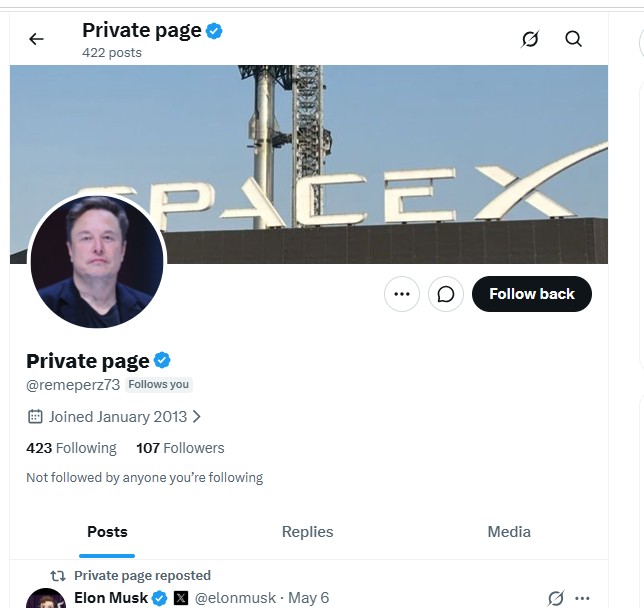
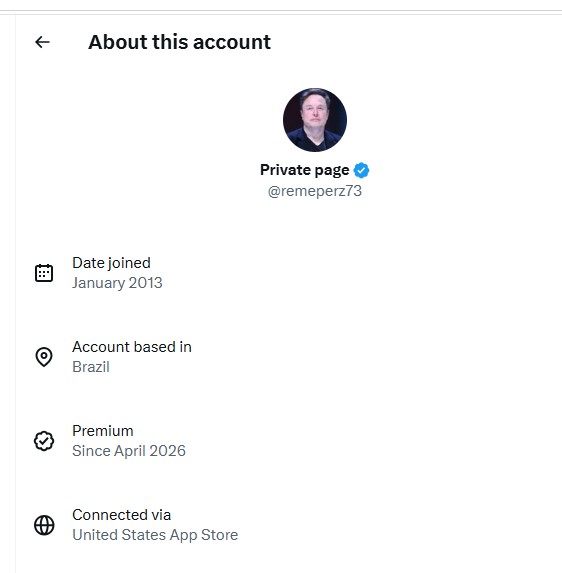
A current example illustrates the absurdity: a profile named "Private page" (@remeperz73) uses Elon Musk's image and is officially verified. However, the account information proves that the account is based in Brazil. Such profiles randomly follow ordinary users without any prior contact—a typical behavioral pattern for phishing and scam campaigns.
The platform's interpretation of "Free Speech" is particularly paradoxical. While fake armies can operate unchecked, real users who warn others experience the opposite: acquaintances who maintain lists of such scammers in their pinned posts to protect the community report massive reach throttling by the algorithm.
The question arises: Why is the active warning against fraud punished, while the infrastructure for fraud (paid verification) is actively sold?
Technically, the solution would be simple. A scalable anti-fake tool based on NLP (e.g., spaCy) could immediately detect and block such patterns. The fact that this is not happening suggests that profit from subscriptions currently takes higher priority than the actual protection of users.
deutsche Version
Die Kommerzialisierung des Vertrauens: Wenn der blaue Haken zum Scam-Werkzeug wird
Obwohl ich meinen Account bereits am 12. Januar 2026 deaktiviert habe, erreichen mich immer noch Berichte von Freunden und Bekannten über die ungebrochene Welle von verifizierten Fake-Accounts auf X.
Dieser Zustand verdeutlicht ein systemisches Problem: Der „blaue Haken“ hat seine ursprüngliche Funktion als Echtheitszertifikat vollständig verloren. Er ist heute kein Status- oder Verifizierungssymbol mehr, sondern lediglich ein Beleg dafür, dass ein Nutzer eine Gebühr bezahlt hat. Damit ist die Tür weit geöffnet für professionelle Impersonatoren.
Ein aktuelles Beispiel zeigt die Absurdität: Ein Profil mit dem Namen „Private page“ (@remeperz73) nutzt das Bild von Elon Musk und ist offiziell verifiziert. Die Kontoinformationen belegen jedoch, dass der Account in Brasilien ansässig ist. Solche Profile folgen wahllos normalen Usern, ohne dass ein vorheriger Kontakt bestand – ein typisches Verhaltensmuster für Phishing- und Scam-Kampagnen.
Besonders paradox ist die Auslegung von „Free Speech“ auf der Plattform. Während Fake-Armeen ungehindert agieren können, erleben reale Nutzer, die andere warnen, das Gegenteil: Bekannte, die in ihren angepinnten Posts Listen solcher Betrüger führen, um die Community zu schützen, berichten von massiven Reichweiten-Drosselungen durch den Algorithmus.
Es stellt sich die Frage: Warum wird die aktive Warnung vor Betrug bestraft, während die Infrastruktur für den Betrug (die bezahlte Verifizierung) aktiv verkauft wird?
Technisch wäre die Lösung simpel. Ein skalierbares, auf NLP (z.B. spaCy) basierendes Anti-Fake-Tool könnte solche Muster sofort erkennen und unterbinden. Dass dies nicht geschieht, lässt vermuten, dass Profit durch Abonnements derzeit eine höhere Priorität hat als der tatsächliche Schutz der Nutzer.
Beweisdokument - der Fake von X
Hier im Text benannter Fake auf Screenshots. Und X tut wenig bis gar nichts um dieses Problem zu beheben.